Why Good Acoustics Matter in Theatres, Teaching Spaces, Studios and Meeting Rooms
When people think about successful buildings, they often focus on architecture, technology, lighting or interior design. Yet one of the most important aspects of any space is something that is often overlooked until problems arise: acoustics.
Whether it’s a theatre where audience members struggle to understand dialogue, a classroom where students cannot clearly hear their teacher, a boardroom where hybrid meetings become frustrating, or a studio where recordings are compromised by unwanted noise, poor acoustics can have a significant impact on the way people experience a space.
The challenge is that acoustics are often invisible when done well. Users rarely notice a room with excellent acoustic performance, but they quickly notice when speech becomes difficult to understand, sound becomes distracting or technology fails to perform as expected.
This is why engaging an acoustic consultant early in a project can be one of the most important decisions a client makes. Good acoustics are essential for communication, learning and performance. By engaging an acoustic consultant during the early design stages of a project, organisations can create spaces that sound better, support users more effectively and improve the performance of AV systems.
Why Acoustics Should Be Considered from the Start
One of the most common misconceptions is that acoustic issues can be resolved towards the end of a project.
In reality, many of the factors that influence acoustic performance are determined during the earliest stages of design.
Room dimensions, ceiling heights, building materials, glazing, structural design, mechanical services and spatial layouts all influence how sound behaves within a space. Once these decisions have been made, it can be difficult and expensive to address acoustic shortcomings.
By engaging an acoustic consultant during feasibility studies, briefing and concept design stages, clients can ensure that acoustic performance is considered alongside architecture, functionality and aesthetics from the outset.
This allows acoustic requirements to become part of the design rather than an afterthought.

Working Alongside Architects and Design Teams
The most successful projects are those where acoustic consultants work closely with architects from the earliest stages.
Architects create spaces that are visually inspiring, functional and responsive to the needs of users. Acoustic consultants help ensure those spaces also sound as good as they look.
This collaboration can influence many aspects of a project, including:
- Room proportions and volume
- Surface finishes and materials
- Building envelope design
- Internal layouts
- Noise control strategies
- Mechanical and electrical services coordination
- Sound insulation between spaces
- Speech intelligibility and user experience
When architects and acoustic consultants work together early in the design process, .often alongside a venue design consultant, it is often possible to achieve better outcomes while avoiding costly remedial work later. The greatest value is often achieved when acoustic consultants are appointed during feasibility and concept design stages, allowing them to work alongside architects before room sizes, layouts and finishes become fixed.
Theatres and Performance Venues
Acoustics play a fundamental role in audience experience. Acoustic consultants often work closely with our AV consultancy and Theatre design consultancy teams to ensure that technology, architecture and room acoustics are considered together
Whether designing a theatre, performing arts centre, studio theatre or auditorium, the acoustic characteristics of a space influence how audiences hear speech, music and performance.
Good acoustic design helps ensure that performers can be heard clearly throughout the venue while creating an environment that is comfortable and engaging for audiences.
Theatre projects frequently require careful consideration of reverberation, sound isolation, audience geometry and the interaction between acoustics, stage technology and audio visual systems.
These decisions are most effective when they are considered during the earliest stages of venue planning and auditorium design.
Studios and Content Creation Spaces
Studios present a different set of acoustic challenges.
Television studios, podcast studios, broadcast facilities, recording environments and virtual production studios all require carefully controlled acoustic conditions.
Unwanted background noise, excessive reverberation and poor sound isolation can significantly affect production quality.
As virtual production continues to grow, acoustic performance has become increasingly important. While much attention is often given to LED volumes, tracking systems and production technology, the acoustic environment remains essential to achieving professional results.
By considering acoustics alongside lighting, production workflows and AV systems, clients can create facilities that support high-quality content creation and future operational flexibility.
Education and Learning Environments
Research consistently demonstrates the relationship between acoustics and learning.
Students cannot learn effectively if they struggle to hear their teacher, and lecturers cannot communicate effectively if speech clarity is compromised by excessive reverberation or background noise.
Acoustic design is therefore an important consideration for:
- Classrooms
- Seminar rooms
- Group study spaces
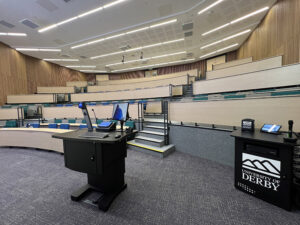
- Lecture theatres
- Learning commons
- Superlabs
- Specialist teaching facilities
In these environments, good acoustics improve speech intelligibility, reduce listener fatigue and support better learning outcomes.
The earlier acoustic requirements are considered, the easier it becomes to integrate them into the wider architectural design.
Healthcare Training and Clinical Skills Facilities
Healthcare education environments present particularly complex acoustic requirements.
Clinical skills suites, simulation facilities and observation rooms often rely on a combination of teaching, communication, recording and assessment technologies.
These spaces may include observation rooms, simulation wards, debriefing spaces and teaching environments, each with different acoustic requirements.
Poor acoustic performance can affect communication, reduce the effectiveness of training exercises and compromise recording quality.
By integrating acoustic design into the wider planning process, organisations can create facilities that support effective teaching, observation and assessment.
Meeting Rooms, Boardrooms and Hybrid Working
The workplace has changed significantly in recent years.
Hybrid meetings, video conferencing and digital collaboration have become standard features of many organisations.
However, technology alone cannot solve poor room acoustics.
Many organisations invest in high-quality microphones, loudspeakers and video conferencing systems, only to discover that meetings remain difficult because the room itself performs poorly.
Excessive reverberation, background noise and poor speech intelligibility can undermine even the most sophisticated AV systems.
Good acoustic design helps ensure that meeting rooms, boardrooms and collaboration spaces support clear communication for both in-person and remote participants.

Acoustics and AV Systems
One of the most important principles in audio visual design is that technology cannot compensate for a poorly designed acoustic environment.
A common misconception is that adding more loudspeakers, larger displays or better microphones will solve communication problems.
In reality, the performance of AV systems is heavily influenced by the acoustic characteristics of the space in which they operate.
When acoustics and AV design are considered together from the outset, organisations achieve better outcomes, more effective communication and improved value from their technology investments.
This is why acoustic consultants and AV consultants often work closely together throughout the design process.
Why Use an Acoustic Consultant?
Acoustic consultants provide specialist expertise that helps clients understand how sound will behave within a space before it is built.
Their role is not simply to solve problems, but to prevent them from occurring in the first place.
By engaging an acoustic consultant early, clients can:
- Reduce project risk
- Improve user experience
- Support learning and communication
- Enhance audience experience
- Improve AV system performance
- Avoid costly redesigns
- Create more flexible and future-ready environments
Most importantly, they can ensure that acoustic performance becomes an integral part of the design rather than a problem to be addressed later.
Frequently Asked Questions
What does an acoustic consultant do?
An acoustic consultant helps clients, architects and project teams create spaces that support clear communication, learning, collaboration and performance. Their role may include assessing room acoustics, controlling noise and vibration, improving speech intelligibility, designing sound insulation and advising on materials, layouts and building systems. By considering acoustics from the earliest stages of a project, consultants help ensure that spaces sound as good as they look.
When should an acoustic consultant be appointed?
The greatest value is usually achieved when an acoustic consultant is appointed during feasibility studies, briefing or concept design stages. Early involvement allows acoustic requirements to be integrated into the architectural design before room sizes, layouts, finishes and building systems become fixed. This often leads to better outcomes and helps avoid costly changes later in the project.
Can poor acoustics be fixed with AV technology?
Not entirely. While microphones, loudspeakers and other AV technologies can help support communication, they cannot fully compensate for poor room acoustics. Excessive reverberation, background noise and poor sound isolation can reduce speech intelligibility and limit the effectiveness of even the most sophisticated AV systems. The best results are achieved when acoustic design and AV design are considered together from the outset.
Do meeting rooms and classrooms need acoustic design?
Yes. Any space where people need to communicate clearly can benefit from good acoustic design. In classrooms, poor acoustics can affect concentration, comprehension and learning outcomes. In meeting rooms and boardrooms, excessive reverberation and background noise can make conversations more difficult and reduce the effectiveness of hybrid meetings. Good acoustic design helps create environments that support clear speech, reduce listener fatigue and improve the overall user experience.
Final Thoughts
Good acoustics are rarely noticed when they are done well, yet they influence almost every aspect of how people experience a space.
Whether designing a theatre, studio, lecture theatre, clinical skills facility, boardroom or virtual production environment, acoustic performance should be considered from the earliest stages of a project.
By bringing acoustic consultants into the design team early and encouraging close collaboration with architects, AV consultants and other specialists, clients can create spaces that are more comfortable, more effective and better suited to the needs of the people who use them.
The result is not simply a better sounding room, but a more successful building.
Explore our acoustics case studies to see how early acoustic design has helped clients create successful theatres, studios, educational facilities and workplace environments.